April 9
Mikael Agricola Day in Finland:
History, Meaning, and the Birth of the Finnish Language
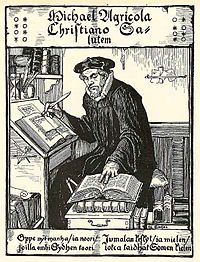
What is Mikael Agricola Day?
On April 9, Finland celebrates Mikael Agricola Day, also known as Finnish Language Day (Suomen kielen päivä). The date commemorates the life and work of Mikael Agricola, who is widely regarded as the father of the Finnish written language.
The day marks the anniversary of his death in 1557 and is an official flag day in Finland.
Who Was Mikael Agricola?
Mikael Agricola (c. 1501–1557) was a bishop, scholar, translator, and key figure of the Protestant Reformation in Finland.
Born into a relatively well-off farming family, Agricola showed early talent in languages. He was sent to study in Vyborg, where he attended a Latin school and adopted the name «Agricola,» meaning «farmer» in Latin—a common scholarly practice at the time.
Historical Background: Finland and the Reformation
In the 16th century, Finland was part of the Kingdom of Sweden. At that time:
- Finnish had no standardized written form
- The educated elite spoke Swedish, German, or French
- The Church conducted services in Latin
The spread of Reformation ideas, inspired by Martin Luther, emphasized that religious texts should be accessible in people’s native languages. This principle became a turning point for linguistic development in Finland.
Creation of the Finnish Written Language
Motivated by Reformation ideals, Agricola began developing a written form of Finnish. His work included:
- establishing spelling conventions
- creating new vocabulary
- combining regional dialects
- borrowing elements from other languages
In 1543, he published the first book in Finnish, known as ABC-kirja (The ABC Book). This publication is considered the foundation of Finnish literary culture.
The First Finnish Book: ABC-kirja
The ABC-kirja was more than a primer. It included:
- the alphabet and numbers
- core elements of Christian doctrine
- the Ten Commandments
- the Apostles’ Creed
- prayers such as the Lord’s Prayer and Hail Mary
- teachings on baptism, confession, and communion
The book played a crucial role in spreading literacy and religious knowledge among Finnish-speaking people.
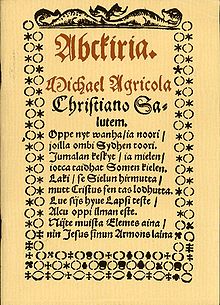
The most famous of Agricola’s texts is the poem on the front page of the Abckiria. Despite its outdated language, the text is still understandable to modern readers:
Oppe nyt wanha ia noori / joilla ombi Sydhen toori.
Jumalan keskyt / ia mielen / iotca taidhat Somen kielen.
Laki / se Sielun Hirmutta / mutt Cristus sen taas lodhutta.
Lue sijs hyue lapsi teste / Alcu oppi ilman este.
Nijte muista Elemes aina / nin Jesus sinun Armons laina.
Opi nyt vanha ja nuori / joilla ompi sydän tuore
Jumalan käskyt ja mielen / jotta taidat suomen kielen.
Laki se sielun hirmuttaa / mut Kristus sen taas lohduttaa.
Lue siis, hyvä lapsi, tästä / alkuoppi ilman estettä.
Niitä muista elämässä aina / niin Jeesus sinulle armonsa lainaa.
Here is an English translation of Mikael Agricola's poem:
Learn now, both old and young,
all whose hearts are fresh and strong,
God’s commandments and His will,
so you may master Finnish skill.
The Law brings fear upon the soul,
but Christ will comfort, make it whole.
So read from here, dear child, begin—
your first lessons free of hindrance.
Remember them throughout your days,
and Jesus will grant you His grace.
After his first publication, Mikael Agricola continued his work on developing written Finnish. His second book was a prayer book in Finnish, which further helped establish the language in religious and everyday use.
In 1548, Agricola achieved a major milestone by translating the New Testament into Finnish. This was a crucial step in making religious texts accessible to ordinary people, in line with the ideas of the Reformation.
Agricola’s Legacy Today
Today, Mikael Agricola is celebrated as a central figure in Finnish cultural history. His contributions:
- laid the foundation for modern Finnish
- promoted education and literacy
- strengthened national identity
Mikael Agricola Day is officially recognized across Finland, with national flags raised in his honor.
How Finland Celebrates the Day
Mikael Agricola Day is observed with a focus on language and culture. Activities often include:
- educational events and lectures
- exhibitions about language history
- school programs and discussions
- public awareness campaigns about the Finnish language
It is a day dedicated to appreciating linguistic heritage and cultural identity.
Conclusion
Mikael Agricola Day is more than a historical observance—it represents the birth of the Finnish written language and the cultural awakening of a nation. Through Agricola’s work, Finnish evolved into a literary language that continues to shape Finland’s identity today.
PAA — People Also Ask
What is Mikael Agricola Day?
Mikael Agricola Day is a Finnish observance on April 9 that celebrates the Finnish language and its founder.
Who created the Finnish written language?
The Finnish written language was created by Mikael Agricola in the 16th century.
Why was the Finnish language not written before Agricola?
Because Finland was part of Sweden, and official languages were Swedish and Latin, not Finnish.
What did ABC-kirja teach?
It taught reading, the alphabet, and basic Christian beliefs.
Why did Agricola translate the New Testament?
To make religious texts accessible to Finnish-speaking people.