February 28
Kalevala Day — A Celebration of Finnish Culture and National Identity
Every year on February 28, national flags are raised across Finland in honor of Kalevala Day, an official flag day dedicated to Finnish culture, language, and heritage. The date commemorates the national epic Kalevala, one of the most important works of world literature and a cornerstone of Finnish national identity.
What is the Kalevala?
The Kalevala is a poetic epic based on ancient oral folklore of the Finns and Karelians. It consists of runes—traditional metric songs—that were transmitted orally for centuries and contain myths, magical incantations, heroic legends, and cosmological narratives.
The epic explores fundamental themes such as the creation of the world, the power of knowledge and song, the relationship between humans and nature, and the struggle between order and chaos. Despite its deep roots in regional folklore, the Kalevala gained international recognition and is today regarded as one of the great national epics of Europe.
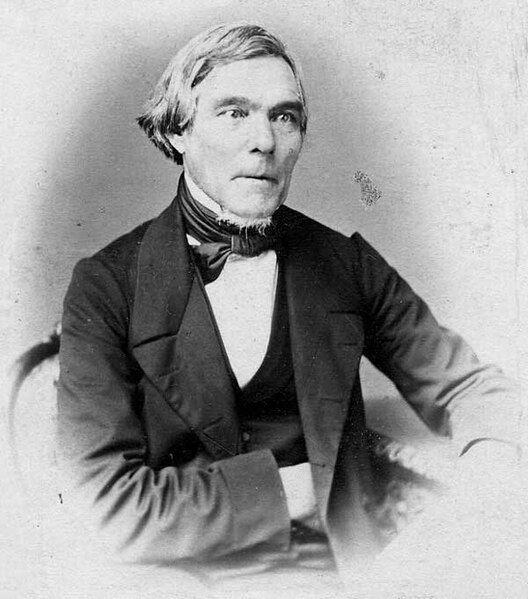
Finnish philologist Elias Lönnrot (1802-1884)
Public domain, via Wikimedia Commons.
Elias Lönnrot and the Creation of the Epic
The first edition of the Kalevala was published in 1835. Its compiler was Elias Lönnrot, a physician, linguist, and folklorist who devoted years to collecting oral poetry.
Lönnrot undertook five extensive folklore expeditions across Finland and White Sea Karelia, recording songs and myths from local singers. His ambition was not merely to archive folklore, but to create a coherent epic poem, inspired in scale and unity by Homer’s Iliad and Odyssey. As a result, the Kalevala is a carefully structured literary work rather than a simple anthology.
Historical Context and the Finnish Language
Before 1809, Finland was part of the Kingdom of Sweden, and Swedish dominated administration, education, and cultural life. Latin was used in academia, while Finnish was considered a peasant language with little literary value.
The publication of the Kalevala radically changed this perception:
- Finnish gained prestige as a literary language
- national consciousness was strengthened
- a foundation was laid for modern Finnish literature, art, and scholarship
The epic demonstrated that Finnish culture possessed depth, history, and expressive power equal to that of larger European nations.
The Canonical Edition of 1849
After the first publication, Lönnrot continued collecting new material. This led to a revised and expanded edition, published in 1849, which is considered the canonical version today.
This second Kalevala:
- is taught in Finnish schools
- has been translated into dozens of languages
- continues to inspire artists, composers, and writers worldwide
Mythology of the Kalevala
The mythological world of the Kalevala forms a complex and coherent cosmology rooted in pre-Christian Finno-Karelian beliefs. It combines shamanistic traditions, nature worship, and poetic symbolism into a unified worldview.
The Creation of the World
The epic opens with a striking cosmogonic myth. The world is created from the egg of a water bird that breaks apart over the primordial sea. From its fragments emerge:
- the earth and the sky
- the sun and the moon
- the stars and clouds
Unlike many mythologies centered on divine conflict, the Kalevala presents creation as an organic and harmonious process, reflecting an intimate relationship between nature and existence.
Väinämöinen — The Sage and Singer
The central hero of the epic is Väinämöinen, an ancient sage, shaman, and master singer. His power lies not in physical strength but in knowledge and song.
Through magic incantations, Väinämöinen can:
- command natural forces
- heal wounds and illnesses
- defeat opponents
- shape reality itself
He embodies the traditional belief that spoken word and poetry possess sacred, transformative power.
Ilmarinen — The Divine Blacksmith
Another major figure is Ilmarinen, the eternal smith and craftsman. He represents creativity, skill, and technological mastery.
Ilmarinen forges the mythical artifact known as the Sampo, a mysterious object that brings prosperity and abundance. As a character, he resembles the archetype of the demiurge — a creator who shapes the world through fire and craftsmanship.
Lemminkäinen — Passion and Recklessness
Lemminkäinen is the most impulsive and emotionally driven hero of the epic. A warrior, adventurer, and seducer, he often acts without foresight.
His story includes powerful mythological motifs:
- death and resurrection
- journeys to the underworld
- conflict between desire and destiny
Through Lemminkäinen, the Kalevala explores human vulnerability, pride, and redemption.
Female Figures and the Power of Fate
Women in the Kalevala are far from passive characters. They are guardians of knowledge, magic, and destiny, often exercising immense influence over life, death, and natural cycles.
These figures embody themes of:
- motherhood and loss
- fate and inevitability
- the bond between humans, ancestry, and land
Kalevala Day in Modern Finland
Today, Kalevala Day is more than a literary anniversary. It is:
- an official flag day
- a celebration of Finnish language and folklore
- a reminder of cultural resilience and continuity
The Kalevala proves that a relatively small nation can contribute profoundly to global culture by preserving, valuing, and reinterpreting its heritage.
Reading the Kalevala, I was struck right from the start by its unusual depiction of the creation of the world. Here's a short excerpt from the first rune:

Ilmatar by Robert Wilhelm Ekman (1860),
Public domain, via Wikimedia Commons.
Ilmatar (ilma meaning “air”), the Daughter of the Air, dwelled in the airy realms above. One day she descended toward the sea, and the waves carried her away. From the waters of the sea Ilmatar, the Daughter of the Air, conceived and came to live within the waters. For seven hundred years she carried the child, yet could not give birth. At last she called upon Ukko, the supreme god of the sky and the thunderer (ukkonen meaning “thunder, storm”), asking him for help. Ukko then sent forth a duck. The duck flew on, searching for a place to build her nest, for as yet there was no land. Taking pity on the bird, Ilmatar raised her great knee above the waters, and …
207
| Lentelevi, liitelevi, päähän polven laskeuvi Siihen laativi pesänsä, muni kultaiset munansa: kuusi kultaista munoa, rautamunan seitsemännen. |
It flew and drifted lightly, settled down upon her knee, there it built itself a nest, laid its eggs of shining gold: six eggs cast of purest gold, and the seventh forged of iron. |
| Alkoi hautoa munia, päätä polven lämmitellä. Hautoi päivän, hautoi toisen, hautoi kohta kolmannenki. Jopa tuosta veen emonen, veen emonen, ilman impi, tuntevi tulistuvaksi, hipiänsä hiiltyväksi; luuli polvensa palavan, kaikki suonensa sulavan. |
There it started warming them, gently heating them with care. Brooded one day, brooded two, soon the third day came as well. Then the Daughter of the Waters, Virgin born of air and sea, felt a burning growing strong, felt her skin begin to scorch; thought her knee was set aflame, thought her veins would melt away. |
| Vavahutti polveansa, järkytti jäseniänsä: munat vierähti vetehen, meren aaltohon ajaikse; karskahti munat muruiksi, katkieli kappaleiksi. Ei munat mutahan joua, siepalehet veen sekahan. |
She then shook her trembling knee, jerked and jolted all her limbs: down the eggs rolled to the water, into waves of the great sea Crashing, broke the eggs to pieces, splintered into shattered shards. They did not sink into the mud, nor were lost within the sea. |
| Muuttuivat murut hyviksi, kappalehet kaunoisiksi: munasen alainen puoli alaiseksi maaemäksi, munasen yläinen puoli yläiseksi taivahaksi; yläpuoli ruskeaista päivöseksi paistamahan, yläpuoli valkeaista, se kuuksi kumottamahan; mi munassa kirjavaista, ne tähiksi taivahalle, mi munassa mustukaista, nepä ilman pilvilöiksi. |
From the fragments good things formed, from the pieces beauty grew: from the lower half of eggs rose the firm and solid earth, from the upper half of eggs arched the lofty vault of heaven. From the yolk, the glowing upper part, shone the sun in burning light; from the white, the shining part, rose the moon to light the night. Speckled bits became the stars, set to sparkle in the sky, darkened shards of broken shell drifted on as clouds of air. |
By learning new things, we begin to perceive our reality differently.
Natalia