February 6.
Sámi National Day – Official Flag Flying Day in Finland
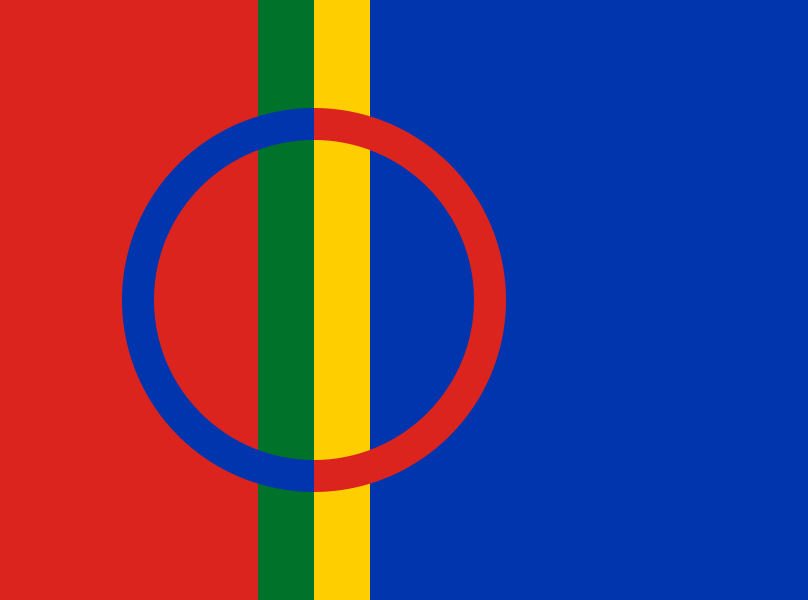
Sámi National Day is observed annually in Finland on February 6. The date is included in the national calendar as an official flag flying day, and public authorities recommend flying both the Sámi flag and the Finnish flag.
The Sámi are Finland’s only officially recognized Indigenous people, with approximately 4,000 Sámi living in the country, mainly in Lapland.
Official Status in Finland
Since 2004, Sámi National Day has been listed in the almanacs published by the University of Helsinki, confirming its established status among Finland’s commemorative and flag flying days.
Authorities in Finland, Norway, and Sweden jointly recommend flag flying on February 6 as a sign of respect for Sámi culture, identity, and cross-border unity.
Why Sámi National Day Is Celebrated on February 6
The date commemorates a key historical event: on February 6, 1917, the first Sámi Congress was held in Trondheim, Norway. Representatives of Sámi communities from different Nordic countries gathered to establish cooperation across national borders.
This congress is widely regarded as the beginning of modern Sámi political awareness. The movement was strongly influenced by global ideas of national self-determination, with a central goal of protecting traditional Sámi livelihoods, such as reindeer herding, fishing, and hunting.
The Sámi Flag and Its Meaning
Sámi National Day is one of the official Sámi flag flying days. The flag symbolizes:
- the sun and the moon,
- the unity of the Sámi people across state borders,
- a deep spiritual connection to nature and the cosmos.
Flying the flag on February 6 is both a symbolic and practical recognition of Sámi cultural heritage.
Traditional Beliefs and Sacred Places
Traditional Sámi spirituality was rooted in animism. The Sámi believed in spirits that governed lakes, rivers, mountains, and natural forces. Sacred stones, cliffs, and large boulders played an important role and were associated with ancestral protection and success in subsistence activities.
Until the early 20th century, many Sámi families kept household idols—small stones wrapped in cloth—believed to embody protective spirits.
Seids — Spirits of Place
A central concept in Sámi belief systems is the seid. A seid could be:
- a stone,
- a tree stump,
- a stone structure (natural or man-made),
- moss growing on a rock.
Importantly, a seid is not the object itself but the spirit inhabiting a specific place. Offerings were made to these spirits to ensure protection, prosperity, and balance.
Noaidis and Ritual Practice
Religious and spiritual functions were carried out by noaidis—ritual specialists who combined the roles of shaman, priest, and healer. During trance rituals, they used:
- a ritual drum,
- sometimes a special belt or ceremonial garment.
Sámi Mythology and Pantheon
Sámi mythology is closely related to Finnish mythology and includes some of the oldest known cosmological narratives in Northern Europe.
The Heavenly Courtship
One prominent myth cycle tells of the sun deity Beaivvi, who seeks a bride for his son from the moon. The refusal leads to a cosmic struggle between opposing forces of nature. The conflict is ultimately resolved by a mysterious midnight elder, sometimes depicted as a walrus—possibly an incarnation of a supreme deity.
Gods and Creation Myths
The Sámi pantheon varied among regions, particularly between eastern and western Sámi groups. Key deities include:
- Jubmel,
- Radien-áhčči (the father god),
- Radien-bárdni (the son),
- Máttaráhkká, the earth and birth goddess.
Reindeer herding is closely linked to myths of Mándaš, a reindeer-man figure considered a totemic ancestor.
Folklore and Oral Tradition
Sámi folklore includes:
- children’s tales (mainnás),
- stories of supernatural beings and giants,
- legends explaining natural phenomena,
- historical oral narratives recounting wars, mountains, and waterways.
Contemporary Significance
In modern Finland, February 6 serves as:
- an official flag flying day,
- a symbol of cultural diversity,
- a reminder of Indigenous rights, history, and continuity in the Nordic region.